Ironwork in Art Nouveau: Flowing Metal Forms and Ornamental Design
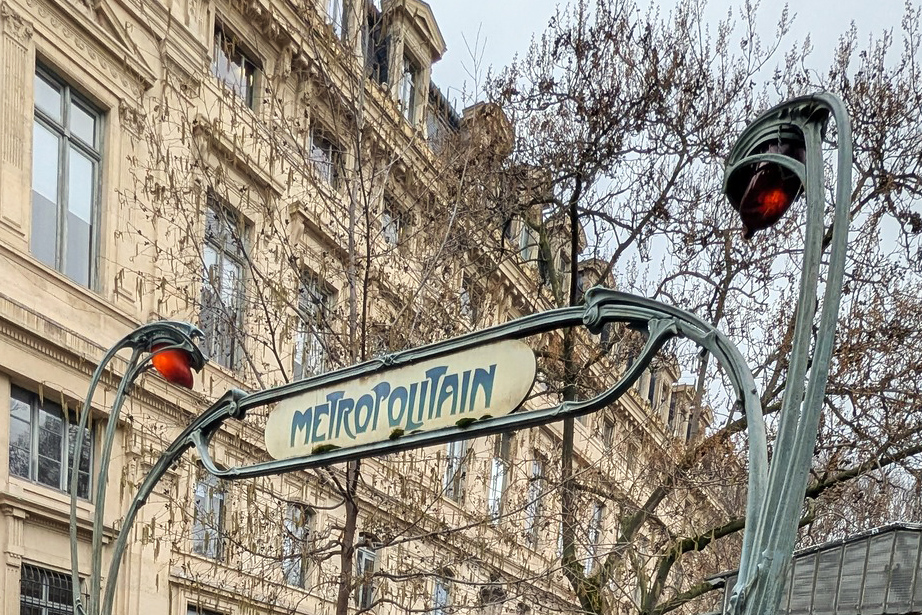
Art Nouveau, a movement flourishing between 1890 and 1910, brought a revolution in design by embracing organic forms, asymmetry, and flowing lines. Nowhere is this more vividly expressed than in wrought iron, a medium that allowed designers to sculpt metal into almost botanical softness. The Paris Métro entrances exemplify this approach through the work of Hector Guimard, who made ironwork seem to grow rather than be constructed.
In the first and third images (the Métropolitain signs), we see the quintessential Art Nouveau iron arch. The curvilinear lines evoke the stems and tendrils of plants. The street lamps, shaped like red flower buds or seed pods, sit atop stem-like arms that curve and twist with botanical elegance. Even the typography of "Métropolitain" uses elongated, sinuous letterforms, making the signage feel integrated with the natural world it mimics. This fluidity contrasts sharply with the rigid, geometric forms of earlier architectural ironwork (such as that of the Industrial Revolution) and anticipates modern, organic design principles.
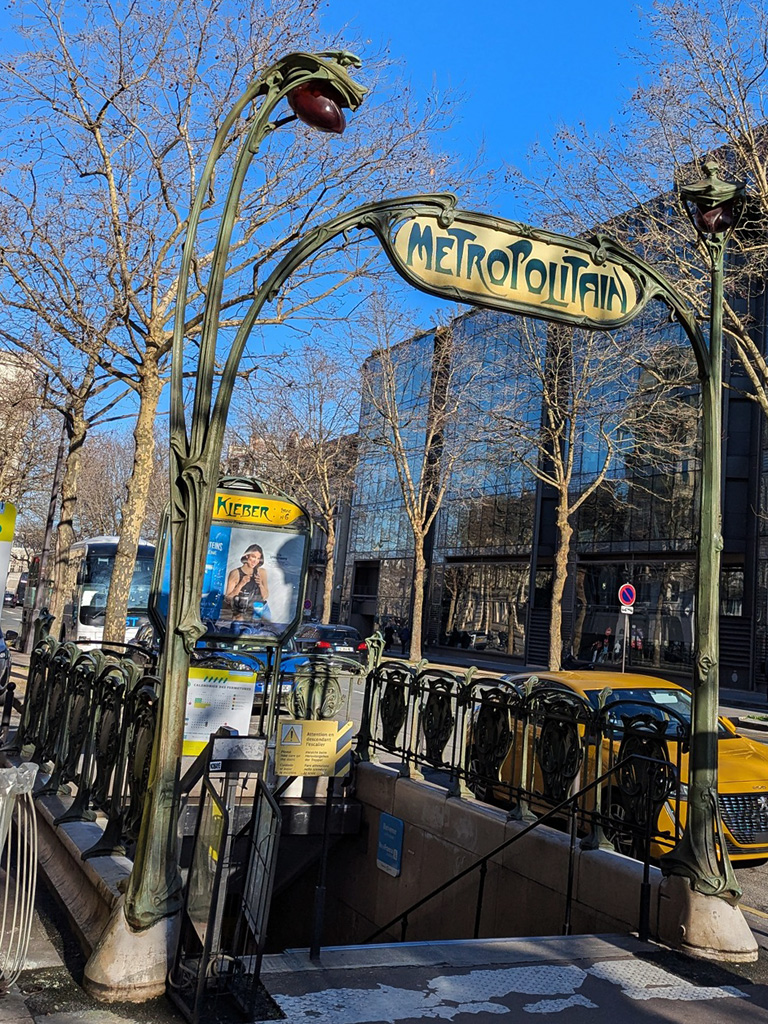
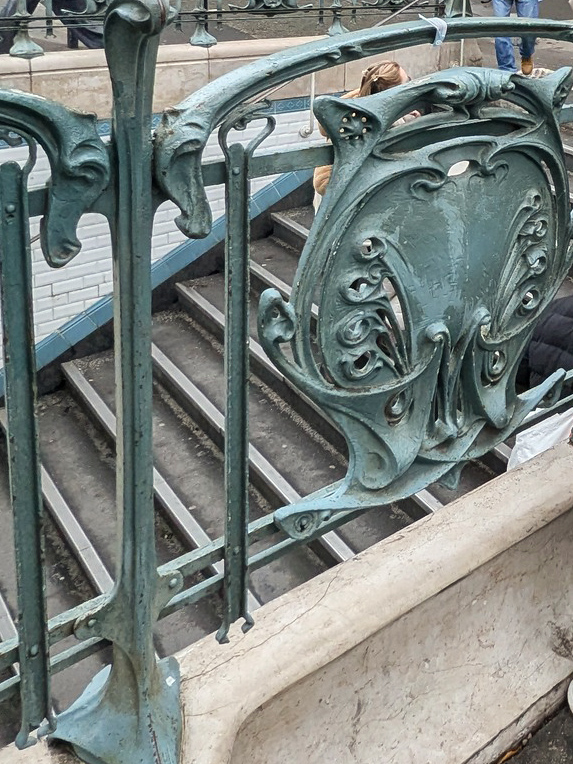
Iron in the Art Nouveau period was not hidden—it was celebrated. Guimard used cast iron to allow for intricate detail while retaining strength. The green patina often seen mimics oxidized copper, lending an aged, organic feel and blending beautifully with urban greenery and stone.
These Paris Métro entrances are perfect case studies in how ironwork, under the influence of Art Nouveau, transcended structure to become sculpture. With their natural forms, elegant curves, and flowing lines, they exemplify the movement’s goal of uniting beauty with utility, and industry with artistry.